Roof Valley Repair Lakewood CA | Valley Leak Solutions
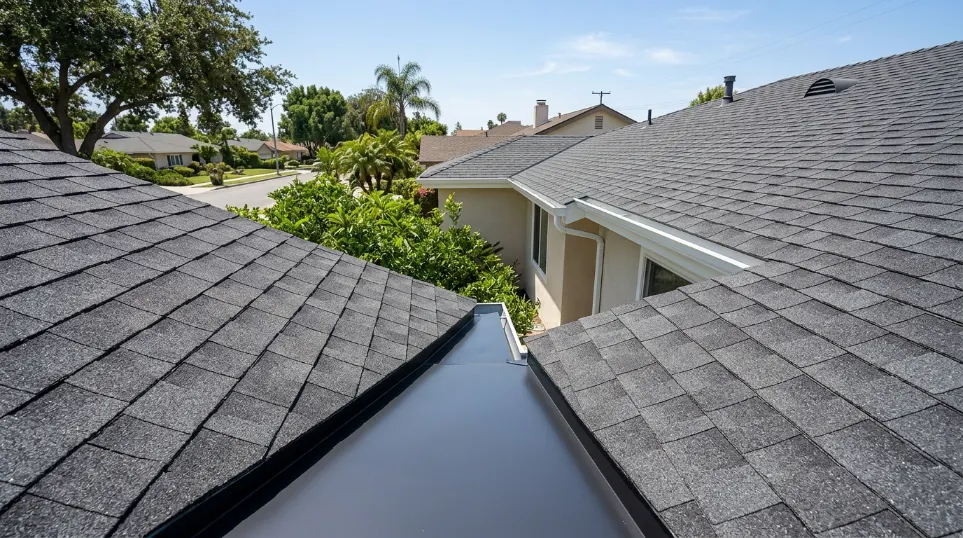
Roof valleys channel immense volumes of collected rainwater from intersecting roof planes, which is why roof valley repair Lakewood CA properties encounter must be handled with precision and care. When two roof slopes converge, water rushes downward at high velocity toward gutter downspouts. If leaves and debris from neighborhood eucalyptus or jacaranda trees accumulate in valleys, runoff backs up beneath surrounding shingles or tiles, rapidly eroding underlayment and causing concealed structural leaks.
Request Roof Valley Repair
Get in touch with an independent local roofing professional serving Lakewood.
Common Signs You Need Roof Valley Repair Lakewood CA
Because roof valleys handle the highest concentration of water flow during Southern California storms, minor installation defects or accumulated tree debris quickly create catastrophic leaks. Valley leaks often go unnoticed until water saturates ceiling drywall along interior room partitions. Understanding the early physical warnings helps Lakewood residents arrange targeted repairs before water breaches interior ceilings and framing members.
- Collected leaves, twigs, and tree seeds creating dams that force water sideways beneath shingles.
- Rusted, pitted, or perforated metal valley liners in older open-valley configurations.
- Cut shingles lifting along valley centerlines due to poor initial adhesive sealing.
- Improperly placed fasteners within six inches of the valley centerline causing direct nail leaks.
- Underlying felt underlayment washed out by high-velocity storm water runoff.
What Our Roof Valley Repair Process Entails
A systematic, code-compliant approach ensures long-lasting exterior protection for your Lakewood property.
Valley Clearing & Inspection
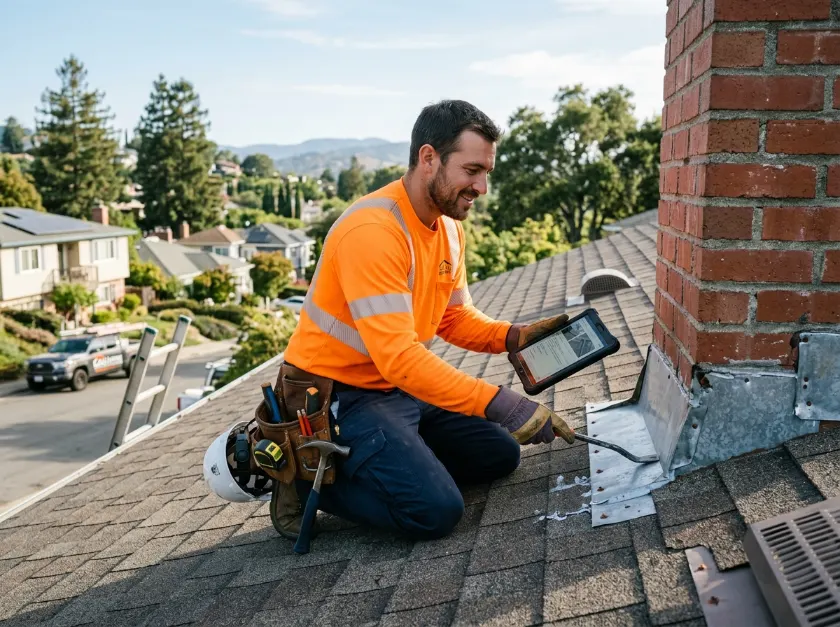
Technicians remove built-up organic matter and examine the valley trough and adjacent courses for damage.
Course Removal Along Valley Margins
Shingles or tiles extending two to three feet on either side of the valley are gently removed to reveal the full metal or membrane valley liner.
Sub-Deck & Valley Board Repair
The valley center board and underlying plywood sheathing are inspected for rot and replaced as needed.
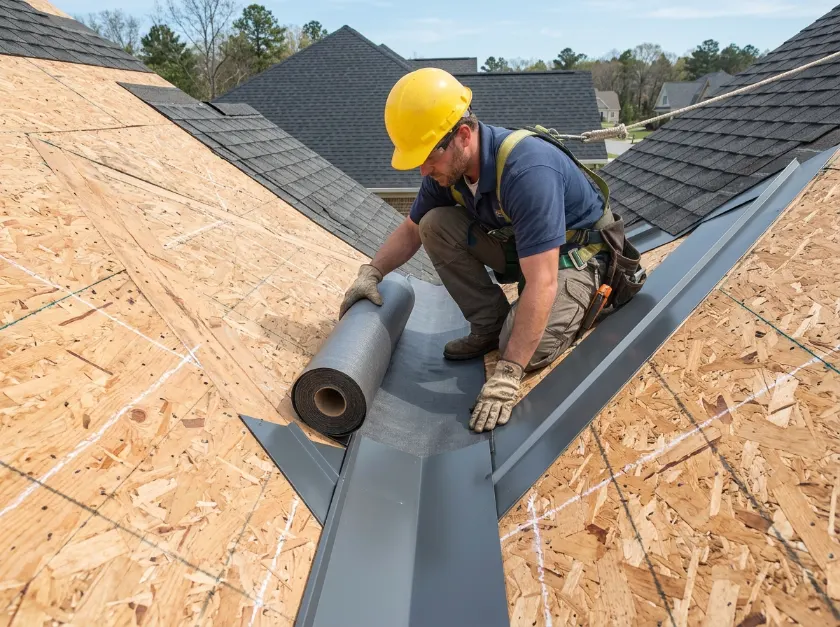
Installation of Dual-Layer Waterproof Membrane
A full 36-inch wide strip of self-adhering ice-and-water shield is rolled down the valley center, followed by a heavy 26-gauge W-valley metal pan.
Precision Re-shingling & Trim Cutting
Roofing materials are re-installed with careful off-center fastening, straight chalk-line trimming, and thermal adhesive bonding.
Materials Used in Roof Valley Leak Repair Lakewood
Durable roof valley repair Lakewood CA projects utilize heavy-gauge metal flashing and specialized waterproof membranes. Contractors install 26-gauge painted galvanized steel or copper "W-valley" metal, which features a central rib that slows cross-valley water rushing. Beneath the metal, high-temperature SBS self-adhering modified bitumen underlayment compliant with ASTM D1970 creates a resilient watertight seal around penetrating fasteners.
ASTM Rated Underlayments
High-temperature synthetic barriers and SBS self-adhering modified bitumen membranes engineered to resist thermal degradation.
Corrosion-Resistant Metals
26-gauge hot-dipped galvanized steel and copper sheet flashings that withstand coastal marine fog and moisture.
High-Tack Elastomeric Sealants
Polyurethane and tripolymer caulks compliant with ASTM C920 that expand and contract smoothly during temperature swings.
Matching Surface Courses
Exact dimensional composition shingles and regional clay or concrete interlocking tiles matched to existing roof lines.
Lakewood Housing Styles & Local Conditions
Lakewood’s suburban streets are famous for lush neighborhood canopies including jacaranda, pine, and eucalyptus trees. When autumn winds shake dead leaves loose, roof valleys quickly collect thick debris dams. Furthermore, many classic Lakewood ranch homes feature intersecting gables and L-shaped rooflines where shallow pitches converge, making clean valley water drainage essential to prevent storm water back-ups.
When considering roof valley repair lakewood ca, homeowners should account for both seasonal Santa Ana wind patterns and winter rain fronts that sweep across southern Los Angeles County. Coordinating maintenance tailored to Lakewood Park, Lakewood Village, and Country Club properties helps extend roof longevity and prevents premature structural timber decay.
When to Repair vs. When to Replace in Lakewood
A leaking roof valley can almost always be reconstructed as an independent repair without replacing the entire roof. By removing shingles two feet on either side of the valley centerline, installing fresh self-adhering underlayment, and inserting a new metal valley pan, the valley is completely renewed, providing another 15 to 20 years of reliable water shedding.
Lakewood, CA Service Coverage Area
Connecting property owners across Lakewood ZIP codes 90712, 90713, and 90715.
Frequently Asked Questions
Clear, direct answers about roof valley repair and local Lakewood roofing practices.
An open valley leaves a four to six-inch strip of sheet metal exposed in the center where shingles are trimmed back on both sides. A closed-cut valley runs shingles continuously across the trough, with the overlapping slope cut straight down the valley centerline.
Open metal valleys shed concentrated rainwater and neighborhood tree debris far more smoothly than closed shingle valleys. The durable painted galvanized metal trough prevents leaves and pine needles from snagging, withstands relentless Southern California sun exposure without drying out, and eliminates the risk of shingle tabs lifting or cracking under high-velocity runoff.
Homeowners should inspect and clear roof valleys at least twice annually, especially in late autumn before winter rainstorms arrive across Los Angeles County. If your property is shaded by mature jacaranda, eucalyptus, or pine trees, scheduling quarterly valley cleanouts prevents organic debris from accumulating into thick dams that divert runoff beneath shingles.
Yes. Because roof valleys channel the highest concentration of rainfall across the entire roof envelope, underlayment leaks directly soak the heavy structural valley rafter. Over multiple wet seasons, chronic moisture saturation fosters aggressive wood rot fungi, weakening structural roof framing and requiring extensive structural carpentry repairs to restore load-bearing capacity.
Fasteners must never be driven within six to eight inches of the valley centerline trough. Because immense volumes of water rush down this channel during storms, water readily backs up around exposed nail heads, corrodes the steel fasteners, and seeps through the punctured underlayment directly into the wooden roof deck.
Need Roof Valley Repair in Lakewood, CA?
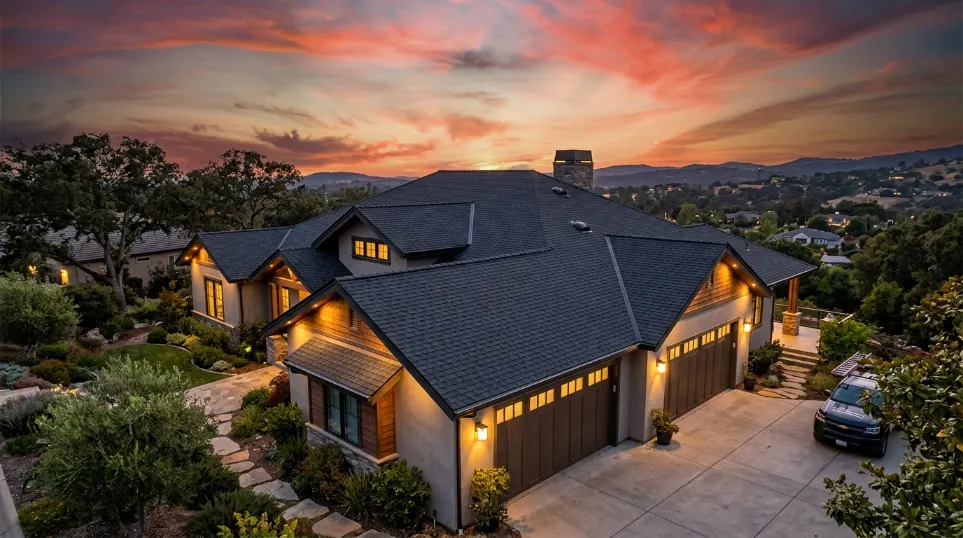
Request information about your roofing needs or connect with an independent local roofing contractor serving Lakewood to schedule an inspection.